

 AP
AP JW
JW AA
AA BH
BH
5 practitioners on the record
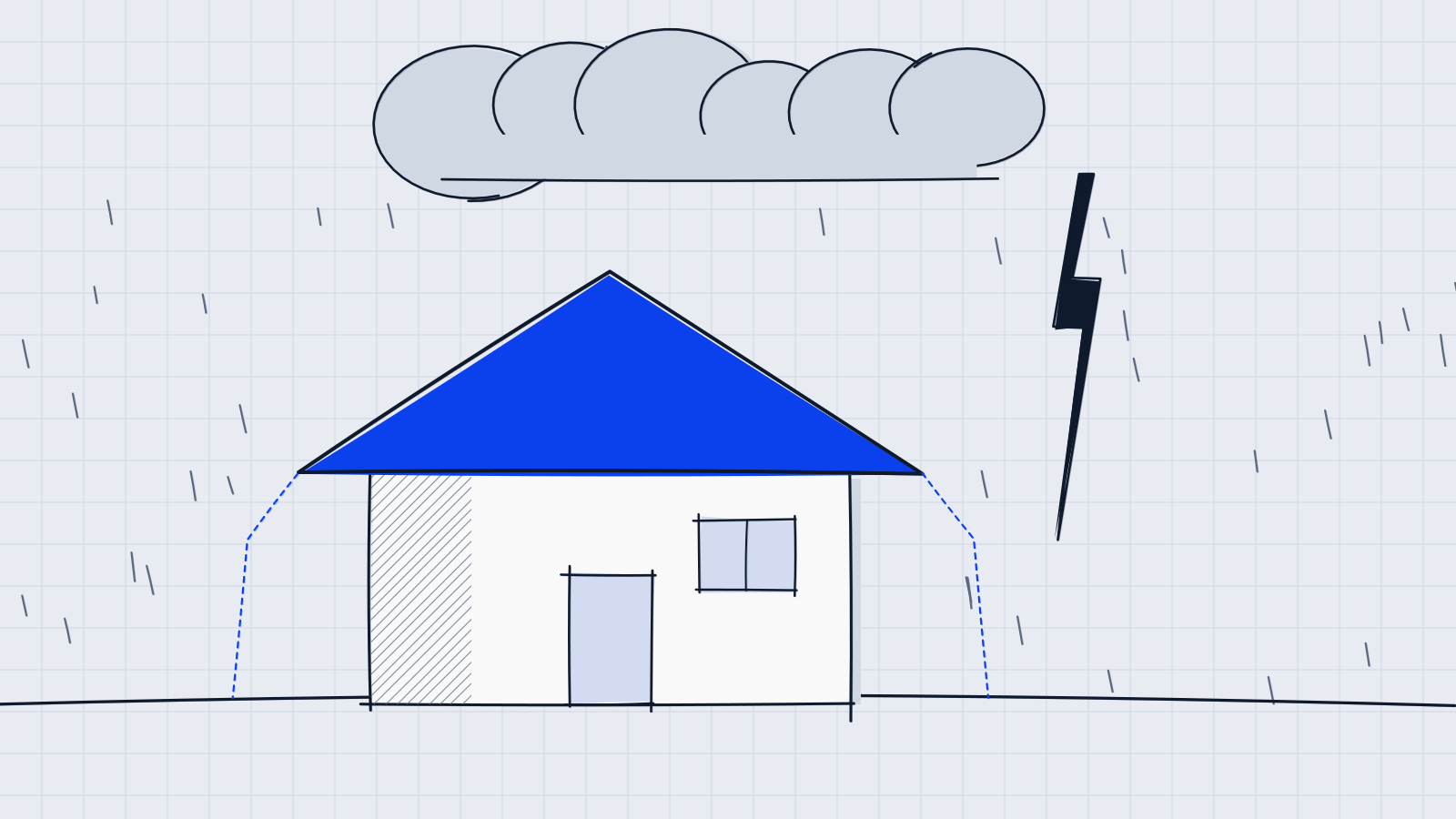
Connect Storm Risk to Code Evidence
As a licensed contractor working directly with insurance adjusters on storm damage claims, I regularly translate structural vulnerability and weather-risk data into practical terms for non-technical stakeholders.
When evaluating commercial flat roofs or TPO systems, I tie complex drainage calculations and storm-load models directly to tangible failure points and building code standards.
I focus on how specific materials from manufacturers like CertainTeed perform under Alabama's extreme weather versus what happens when drainage designs fail.
This is effective because it grounds abstract risk calculations in physical, verifiable evidence and code compliance, making claim approvals straightforward and fast.
Frame Models as Financial Stress Tests
Abhishek PareekFounder & Director, Coders.devEffective communication of complex risk models to non-technical stakeholders requires shifting the focus from mathematical weightings to the real-world impact on the balance sheet. Stakeholders generally disengage when presented with confidence intervals or stochastic variables; they respond to scenarios that illustrate capital preservation or potential depletion. In my experience overseeing insurance technology delivery, the most successful approach is to strip away the jargon and present the model as a financial stress test that speaks the language of the board.
I use an analogy-first framework that treats the risk model like a flight simulator for the company's finances. Instead of detailing the internal logic of the code, I present the model's output as a series of specific "what-if" business events. For example, rather than discussing the statistical probability of a tail risk event, I frame the conversation around the dollar amount of additional capital reserves required to survive that event. When an abstract technical concept is translated into a concrete financial decision, stakeholders immediately grasp the trade-offs involved.
This method is effective because it honors the stakeholder's expertise in business operations rather than forcing them to navigate data science. By anchoring the explanation in known metrics like loss ratios or liquidity thresholds, the technical team gains the trust necessary to implement complex architectural changes. A model is only as valuable as a business leader's ability to act on its findings. If the output cannot be explained in terms of risk to the bottom line, it remains a technical exercise rather than a strategic asset.
Link Findings to Clear Actions
John W.Owner, Sureway ComfortAs a Master Plumber and owner of Sureway Comfort since 2014, I've had to turn technical HVAC and plumbing findings into decisions homeowners, lenders, or insurance-side folks can act on.
One method I use is a simple "risk-to-action" explanation: what we found, what could happen if ignored, and what the next practical step is. For example, instead of talking only about load calculations, insulation, and system sizing, I'll explain that an oversized or undersized HVAC system can mean comfort issues, higher wear, and avoidable service calls.
On plumbing, I do the same with water quality or drain issues. If we're evaluating filtration, slow drains, recurring clogs, or pipe concerns, I connect the finding to the real-world risk: damage prevention, protecting fixtures, and keeping the home safe and functional.
What makes it effective is that I don't ask non-technical people to "trust the model." I tie the output to visible symptoms, plain-language consequences, and clear options: repair, maintain, replace, or monitor.
Map Probabilities to Patient Outcomes
Aalaa Ahmad, MSN, APRN, FNP-BCNurse Practitioner, LoveLand Medical SpaWith over 14 years of clinical experience, including a decade in intensive care and neuroscience, I frequently translate complex clinical risk data and prognostic models for insurance evaluators.
When discussing risk model outputs, I replace dense statistical matrices with functional physiological milestones and clear complication trajectories. Mapping risk probabilities directly to observable neurological baselines and physical endpoints helps non-technical reviewers clearly assess exposure.
This approach was effective because it shifted the focus from abstract algorithms to tangible patient outcomes. Framing the data around clear cause-and-effect clinical markers gave stakeholders the exact clarity needed to make confident coverage decisions.
Show Exposure Through Building Failures
Bill HoganOwner, Hogan RoofWith over 20 years leading Hogan Roof and acting as a dedicated insurance liaison across the NY, NJ, and CT tri-state area, I frequently bridge technical risk assessments and property exposure data for homeowners and insurance representatives.
When explaining structural vulnerability outputs, I map theoretical wind-shear and moisture risk directly onto physical building components during our on-site damage assessments. For example, demonstrating how shingle uplift thresholds on an Owens Corning roof relate to localized storm models helps stakeholders grasp the physical reality behind the data.
What makes this effective is replacing dense risk scoring with tangible failure points, such as flashing wear or gutter overflow risks. This shifts the conversation from abstract numbers to clear, practical steps for protecting the property.